


care during childbirth. Significant investments in energy, economic infrastructure, and the manufacturing sector are being launched to give new impetus to the structural transformation of our economy.
We have one conviction: whatever the situation, we must remain ambitious. This level of ambition is driven by strong leadership, which is driving a very strong dynamic to achieve the objectives of greater inclusion, economic development, and positioning the country, which would generate greater well-being for the population.
We remain aware that achieving these objectives is only possible in a climate of peace and security. This is why, in light of the increasingly worrying security threat in the sub-region, we must accelerate responses to the vital needs of populations, as this means continuing to reduce social disparities. We must redouble our vigilance to protect not only our land and maritime borders, but also our populations.
Part of your career has been spent in the private sector. What actions do you plan to take to attract more investors to Togo, particularly in the transportation, energy, and manufacturing sectors?
Our country, under the leadership of the Head of State, is increasing its efforts to attract more investors, who, through their activities, contribute to the growth of our economy. Our reform strategy aims to facilitate and secure the conduct of business: we have, in particular, steadily improved the attractiveness of our country over the past ten years. Togo is not only one of the safest countries of Africa: it is the easiest country to do business in on the continent. It is possible to start a business in less than 20 hours. Despite the Covid-19 pandemic and its significant macroeconomic repercussions, the job creation indicator has continued to grow to stand at 10% in 2021; at the same time, the country has shown notable resilience in attracting investment. According to the "World Investment Report 2021" of the United Nations Conference on Trade and Development (UNCTAD), Togo recorded a spectacular increase of 85% in FDI (foreign direct investment) in 2020. Concretely, Investments Direct foreign payments to Togo increased from nearly 191 billion FCFA (346 million $) in 2019 to more than 352.5 billion FCFA (639 million $) in 2020. Remember that in 2020, with a score of 10.83 obtained for the index 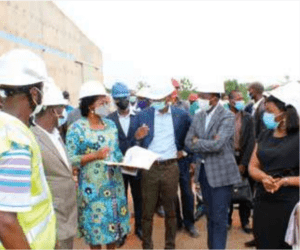
Greenfield of FDI, Togo was the first country in the world, in relation to the size of its economy, in attracting FDI. Large-scale projects for the great benefit of the populations have been developed with the private sector in recent years. last two years. In terms of energy, these are the Kekeli combined cycle gas plant and the Blitta solar plant, the largest photovoltaic plant in West Africa; in terms of industry, the construction of the Adétikopé industrial platform located 27 km from Lomé. This platform will accelerate the emergence of new manufacturing industries with high potential for local employment. The road transport network continues to expand, and we are focusing on logistics and the deployment of digital technology. More recently, our country adopted two important laws relating to public procurement and public-private partnership contracts.
Also, in order to facilitate business while fully having a modern administration and clear procedures, a ministry entirely dedicated to the promotion of investment was created.
This is to say that we continue to take measures to improve not only the business environment in the country, but also within our administration so that it can efficiently support investors. It is in this sense that reforms have been undertaken for the establishment of a one-stop shop for transactions, advantageous tax measures, etc.
I will conclude by saying that, based on the clear guidance of the Head of State, the government is committed to providing a favorable environment to attract diverse investors and to further mobilize our national private sector, which is a partner of choice. However, as I mentioned earlier, we have not forgotten the security aspect, which is an equally important and determining factor in attracting investors. The Togolese Head of State is very attentive to these issues, and we are actively working to preserve peace and security in our country. 60% of the Togolese population is under 25 years old.
What are the support mechanisms put in place by the Togolese State for the economic integration of young people?
Young people constitute the majority of the population. They remain an asset, a vital force on which we must rely for the development of our country.
The State believes in the potential of young people. When they are well educated, well trained, and healthy, young people bring inestimable value to the realization of our ambitions.
This is why the roadmap places particular emphasis on the development of human capital with the improvement of educational infrastructure, health care services, and an active social protection strategy.
We also understood very early on that we need to support young people in their professional integration.
It is for this reason that youth empowerment mechanisms, youth development programs entrepreneurship have been set up with specific programs to structure agricultural value chains in which young people are heavily involved. Thanks to these programs, we have been able to create over a period of 5 years a little over 700,000 jobs for young people in the production and agro-industry sectors (soybeans, rice, corn, cassava, etc.): this has enabled Togo to become the leading African exporter of organic soybeans to Europe.
The result is simply edifying. Today, we are witnessing the emergence of a class of young entrepreneurs. The challenge is to find the best support to sustain their growth and enable them to fully play their role as the driving force of the Togolese economy. We must also remember that our country has chosen to promote volunteerism. Because beyond these entrepreneurship programs, we are convinced that it is also important to develop civic values in these young people. The establishment of work-study training institutes for development (IFAD), whether in the agricultural (aquaculture, livestock) or construction sectors,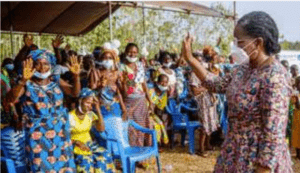 renewable energy, logistics, participates in this voluntary approach to youth integration. As I mentioned above, the ambitions displayed by the government roadmap have a dual objective: to ensure greater inclusion and to create a large number of sustainable jobs for young Togolese people.
What is your vision of the Africa of tomorrow?
I would first like to recall the vision of our country: "a Togo at peace, a modern nation with inclusive and sustainable economic growth." This vision which grants an important place for social inclusion and harmony is driven by the strong leadership of the Head of State and is based on solid partnerships with the private sector.
In Africa, the future will be increasingly younger and more feminine! The Togolese experience is already showing the way, with women and young people occupying key positions. responsibility in the country. We believe that Africa today has a potential of young people to whom the world will turn since most continents are facing an aging population.
Today's Africa is already an innovative Africa. We therefore believe that it would be appropriate for state policies to strengthen inclusion in all spheres and at all levels, allowing no one to be left behind and creating a favorable environment for the blossoming of each individual's genius.
With its port, one of the most efficient and secure in Africa, Togo is positioned at the heart of this continent as a gateway to West Africa. With initiatives such as the African Continental Free Trade Area (AfCFTA), our country offers the possibility of accessing a continental market. I therefore invite you to discover Togo, this country of 8 million inhabitants, which is a great country of ambition,of work and results. A country that demonstrates exceptional resilience...