Space not available
Reserve this advertising space
Selected ad format
The file format is not recognized
Click here for
upload an ad
Click here to download
an announcement
Here drag and drop or
upload an ad
Send the ad up to 8 days after payment
A link will be sent to you by contact@via-agency.media
Reserved space
Announcement transmitted
Reference
The Autonomous Port of Brazzaville and Secondary Ports (PABPS) is the country's main river port, handling 951,300 tons of national river traffic. Authorities have taken on the task of modernizing the river network.
Space not available
Reserve this advertising space
Selected ad format
The file format is not recognized
Click here for
upload an ad
Click here to download
an announcement
Here drag and drop or
upload an ad
Send the ad up to 8 days after payment
A link will be sent to you by contact@via-agency.media
Reserved space
Announcement transmitted
Reference
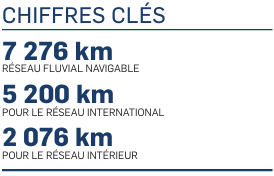
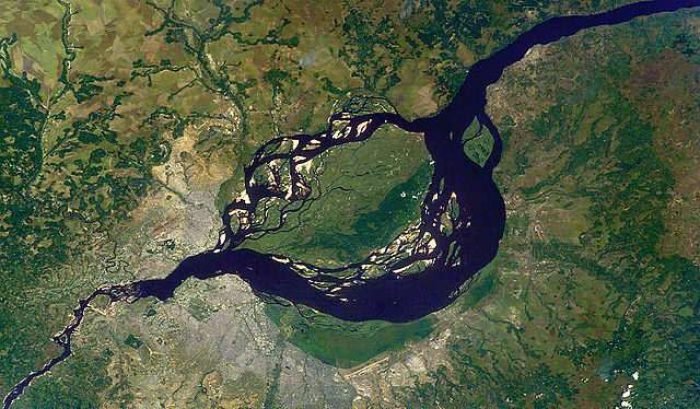
The Congo River is one of the essential elements of the country's river transport network and, together with the Ubangi, forms the transequatorial axis of the international river network. These rivers are navigable up to the border with the Central African Republic. The Congo River is the second largest in the world after the Amazon in terms of flow. The navigable river network is 7,276 km, including 5,200 km for the international network and 2,076 km for the internal network.
The inland waterway network includes the following waterways: the Léfini, the Likouala Mossaka, the Likouala aux Herbes, the Alima, the Kouyou, the Ibenga, and the Motaba. Despite this extensive waterway network, river transport remains a weak link in the multimodal transport chain.
The PABS, the structure responsible for managing traffic and the use of the country's river and secondary ports (Ouesso, Ngombé, Mossaka, Impfondo, Oyo, Makoua, Boundji, Etoumbi and Owando), is experiencing a difficult financial situation caused in particular by the decline in traffic on the Congo River due to the continued silting of the ports and by competition from unregulated ports upstream of the port of Brazzaville. Due to its shallow draft, particularly at the Port of Brazzaville and especially during the dry season, the Congo River is only navigable six to seven months a year. The Economic Interest Group responsible for the joint maintenance service for the waterways of Congo-Brazzaville and the Central African Republic (GIE-SCEVN), created in 2007, is struggling to fully fulfill its mission.
Space not available
Reserve this advertising space
Selected ad format
The file format is not recognized
Click here for
upload an ad
Click here to download
an announcement
Here drag and drop or
upload an ad
Send the ad up to 8 days after payment
A link will be sent to you by contact@via-agency.media
Reserved space
Announcement transmitted
Reference
After years of underperformance, the river port of the Congolese capital returned to sustained activity in 2022, with a positive balance sheet, and hopes to boost its traffic.
The resumption of traffic on the Congo and Oubangui rivers will not only facilitate the movement of people and goods, but will also boost river tourism.
A shipyard will be built in the Ignié district, in the same area as the site chosen for the Brazzaville/Kinshasa road-rail bridge project. The construction of the shipyard will enable Congo to acquire a public shipowner for ship maintenance and repair, supporting the Autonomous Port of Brazzaville and secondary ports. The shipyard was sold by the Congolese government to a private investor for 100 billion CFA francs.
Another major initiative, essential for the river transport chain, is the shipyard, which is being relocated from its former site in downtown Brazzaville. The new technical facilities will have the advantage of extending over a large area and being equipped with more modern equipment.
The development of the river economy depends in part on the establishment of structures dedicated to the construction, repair and maintenance of navigating units. The Project to Support the Regulation, Facilitation, Security and Sustainability of River Transport in the Congo Basin (PARFSED) aims to contribute to the improvement of river transport infrastructure in the Cicos area to make it a corridor for opening up and integrating the Central African sub-region.
Space not available
Reserve this advertising space
Selected ad format
The file format is not recognized
Click here for
upload an ad
Click here to download
an announcement
Here drag and drop or
upload an ad
Send the ad up to 8 days after payment
A link will be sent to you by contact@via-agency.media
Reserved space
Announcement transmitted
Reference