


INBAR (International Network for Bamboo And Rattan) and PROSPERER (Programme de soutien aux pôles et micro entreprises rurales et aux économiques régionales de Madagascar) are working to develop a real sector by 2022.
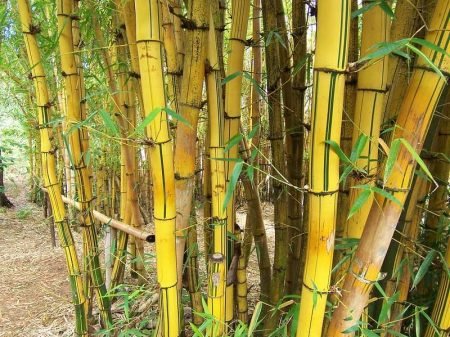
Bamboo has the potential to contribute to poverty reduction, youth employment, and environmental protection for millions of disadvantaged rural communities and smallholder farmers in sub-Saharan Africa, in line with the UN Sustainable Development Goals. Madagascar boasts the world's greatest variety of bamboo, with nearly 40 species, 35 of which are endemic. Bamboo is used in various sectors, including textiles, paper, handicrafts, construction, biomass energy production, cosmetics, and food processing.
With deforestation being the number one environmental problem in Madagascar, 100 hectares of bamboo were planted in Andringitra in March 2019 in the Ambohidratrimo district. This project was led by the Ministry of Agriculture, Livestock and Fisheries (MAEP) through the PROSPERER Program in collaboration with the Ministry of Environment and Sustainable Development (MED) and the International Network for Bamboo and Rattan (INBAR). Eight other regions, including Analamanga, are now benefiting from this project, whose overall objective is to improve the incomes, livelihoods, and climate change adaptation capacities of smallholder farmers, women, and young Malagasy people, while strengthening the use of climate-friendly bamboo value chains.