


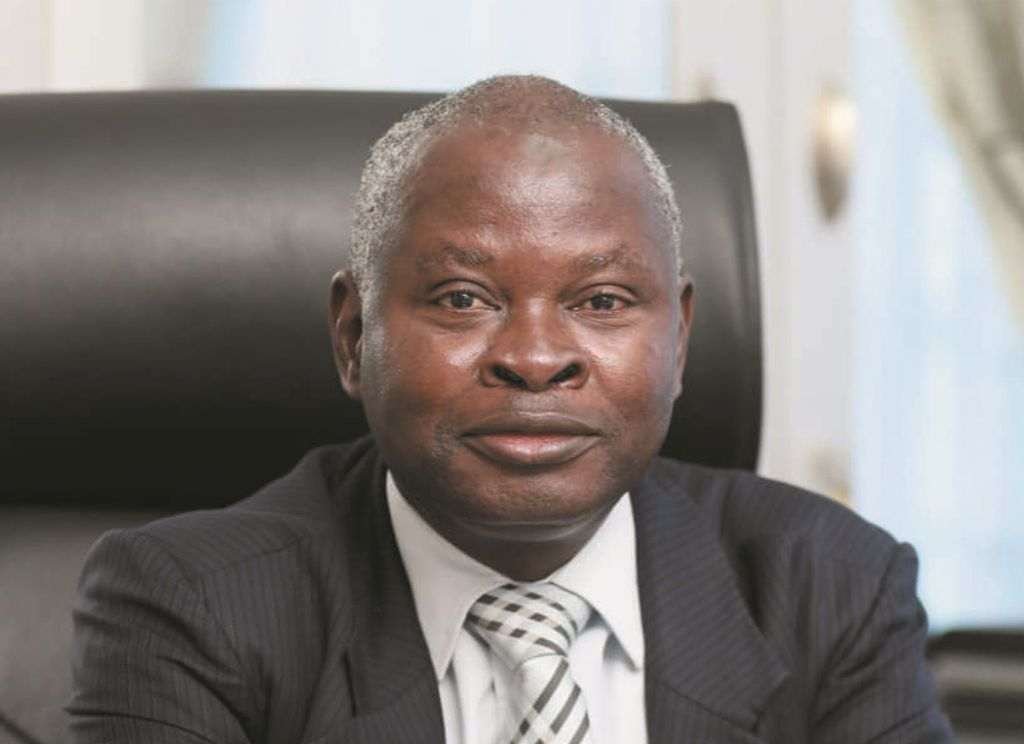
Interview with Bolidja TIEM, Minister of Water and Village Hydraulics, since October 2020. He previously held the position of Director General of the Togolese Agency for Rural Electrification and Renewable Energies (AT2ER).
What is the progress of the roadmap providing access to drinking water services for populations, as set out in strategic axis 3 of the PND?
The Government aims to guarantee the basic social service of access to drinking water, defined as a fundamental right by legal and international instruments, and implemented through rational investment planning and service management.
With this in mind, on the basis of SDG 6 and the National Development Plan (NDP) in particular, the Government has adopted a strategic Roadmap (RF) 2020 – 2025 with a view to ensuring access to drinking water of 85% in 2025 at the national level with 95% of access to drinking water in rural areas, 85% in semi-urban areas, 75% in urban areas outside Lomé and 80% in Greater Lomé and converging towards 100% by 2030.
To achieve these objectives by 2025, several actions were carried out in 2021. These actions made it possible to provide drinking water to approximately 413,817 additional people, increasing the service rate from 60% in 2020 to 61,53% in 2021, an increase of 1,53%.
Taking into account the residential environment, this rate increased from 68.13% to 69.49% for rural areas, from 53% to 52.88% for semi-urban areas and from 57.57% to 60.25% for urban areas. The achievements presented by residential area
The following have made it possible to record this progress. These are:
For the rural environment
The construction and equipment of 219 new PMH boreholes, 89 autonomous water stations and 10 basic mini-drinking water supply systems. This made it possible to serve approximately 93,890 additional people. This increased the rural service rate from 68,13% in 2020 to 69,49% in 2021.
For the semi-urban environment
During 2021, work in this area resulted in the construction of 59 PMHs, 31 PEAs, and 10 MINI-AEPs. These projects provided drinking water to nearly 57,643 additional people.
The service rate in this area has seen a slight decline, going from 53% in 2020 to 52,88% in 2021. This decline is due to the fact that the achievements are not sufficient compared to the galloping population growth.
For the urban environment
In 2021, the achievements in this area mainly concerned private domestic connection work (BP), network extensions and capacity building of drinking water production and storage units.
In total, 254,213 linear km of network were laid, 19,908 new BPs were built, 2 water towers with a storage capacity of 1000 m3 and 15 standpipes were built. These achievements made it possible to serve an additional population of 262,284 inhabitants, increasing the service rate from 57,57% in 2020 to 60,25% in urban areas in 2021.
Several actions are underway and planned with the support of several TFPs in the three (3) environments to further improve these rates. These include: the PEAT1 & PEAT2 projects with the EU; the Project to improve the drinking water supply in the city of Lomé-Phase 2 with AFD and EU funding; the Project to improve sanitary conditions in schools and rural areas in the Savanes and Kara regions (PASSCO 2) with the AFD; the Drinking Water Supply Project for semi-urban centers in Togo (PAEPCSU); the PND-EAU; the Project to Strengthen and Extend Drinking Water Supply Systems in the cities of Agou Gadzepe, Blitta; the Drinking Water Supply Project for the city of Kara and its surroundings; emergency drilling work and drilling work on ZAAP (Planned Agricultural Development Zones), etc.
In addition, reforms and measures were implemented during 2021 to improve sector governance in order to accelerate the achievement of the FdR results by 2025. These include: updating performance contracts and plan contracts (currently being signed); developing the Investment Plan (currently being finalized); creating the Contract Monitoring Committee; setting up the project monitoring unit of the Ministry of Water and Village Hydraulics (CSP-MEHV); introducing water abstraction fees and framing drilling activity in the application of the Water Code; establishing bi-weekly meetings for pending projects with all stakeholders; relaunching the coordination of actions between all stakeholders in the sector to align activities with the objectives of the roadmap; the initiation of projects creating economic value such as the ongoing prepaid meter pilot project (10,000 units); the definition of a strategy for access for all to water and sanitation by 2030; the identification of multi- and bilateral partners for the financing of projects in the sector, etc.
How do you manage the maintenance of the facilities?
Since 2009, the Ministry has implemented a PROGRES database. It tracks administrative and technical data on facilities and monitors the quality of water supplied to populations, particularly in rural areas. Currently, the PROGRES database contains 12,021 facilities.
For real-time monitoring and maintenance of hydraulic structures, the MEHV, with the support of the Ministry of Posts and the Digital Economy, developed in 2019 a platform for "Monitoring of Drilling Structures and Indicators for Water" called SOFIE based on mobile telephony. The SOFIE platform complements the PROGRES database, particularly in monitoring breakdowns. SOFIE currently monitors the operating status of 9,064 structures. The process of integrating the remaining structures into the SOFIE platform is underway in order to take all structures into account for monitoring. This platform allows the operating status of the structures to be viewed in real time on a map through the color of the structures: Red (declaration of breakdown by the water committee), Blue (repair order taken by the repairer), Orange (confirmation of the repair order taken by the works monitoring agent) and Green (repair confirmation by the water committee).
The objective of the SOFIE platform is to facilitate exchanges between the various stakeholders involved in drilling management in order to reduce breakdown repair times and drilling operating costs. This platform allows for real-time fault detection, rapid triggering of troubleshooting interventions upon notification of faults, and collection and archiving of the results of troubleshooting interventions and statistics.
The SOFIE platform is based on mobile technology. Each borehole is identified by a phone number that links the various stakeholders who interact to ensure the proper functioning of the borehole. Once a borehole breaks down, a committee member calls the toll-free number 1020 to report the breakdown. This triggers a semi-automated process to enable rapid repair of the structures. The repairer receives an SMS notifying them that the borehole is down and proceeds with the repair. Verification of the effectiveness of the repair is monitored by a structure monitoring agent who reports to management. If the process is followed normally, the borehole is repaired within 72 hours. After this period, the system automatically sends a message to the Sociologist and the Regional Director of Hydraulics to report the borehole beyond the repair deadline. Both the Sociologist and the Director are responsible for calling the various stakeholders outside the system to ensure rapid repair of the borehole. The availability of spare parts in regional and prefectural stores makes it possible to meet the repair deadline set by the MEHV. The SOFIE platform produces data on the operating status of drinking water systems, breakdown reporting statistics, statistics on the duration of repairs to systems, and the geographical distribution of systems. Regarding repairs, members of the water committee manage minor breakdowns, and the State, through projects, rehabilitates boreholes requiring large investments.
What opportunities does Togo have through its membership in the Water Convention?
Togo, like most other countries in the world, in Africa and mainly in the West African sub-region, shares most of its water resources, both surface and groundwater, with other countries, namely: Burkina Faso, Benin, Ghana, Côte d'Ivoire and Mali for the Volta River basin represented in Togo by the Oti; Benin for the Mono River basin; Ghana, Benin and Nigeria for the sedimentary basin and the coastal lagoon system. Thus, the management and use of these water resources constitute a strategic issue. It appears necessary to cooperate with neighboring countries in accordance with national legal provisions and international conventions establishing the legal framework within which countries sharing transboundary water resources can cooperate to ensure development and preserve regional stability. Thus, the Convention on the Protection and Use of Transboundary Watercourses and International Lakes, being an important instrument to further promote cooperation at both sub-regional and international levels and to coordinate the rational, impartial, sustainable and non-conflictual management of transboundary water resources, the Government has spared no effort to have Togo accede to it.
Authorized by the National Assembly on May 11, 2021 to accede to this Convention, Togo officially became, on December 27, 2021, the 46th Party and the 5th African State to accede to this important international legal instrument. Togo's accession to this Convention not only aims to support the efforts undertaken by West African countries in the sustainable management of their water resources but also has several strategic challenges:
• improving water management at the national level: the application of the obligations of the Convention, in particular those relating to the prevention, control and reduction of significant transboundary impacts, improving the management of water resources at the national level;
• contribution to international peace and security: participation and cooperation within the Convention's intergovernmental platform helps to prevent possible disagreements, tensions or disputes, thus contributing to the maintenance of international peace and security;
• Access to financial assistance and donor cooperation: Membership of the Convention increases the chances of accessing external funding for projects concerning the use, management and protection of transboundary water resources. Member countries of the Convention can also benefit from the trust fund that supports the effective implementation of the Convention;
• sharing of knowledge and experience: member countries benefit from the dissemination of good practices, mutual learning and experience acquired under the Convention in various areas: problems of flooding, drought, dam safety, joint management of hydraulic infrastructure, allocation of water between drinking water supply, irrigation and energy production;
• Support for bilateral and basin cooperation: The Convention supports its members in establishing agreements and joint bodies for specific basins, as well as strengthening existing ones. While the Volta Basin Authorities (ABV) and Mono Basin Authorities (ABM) are operational or in the process of becoming operational, the aquifer system of the coastal sedimentary basin still remains without any transboundary arrangement. The Water Convention can significantly contribute to the establishment of an agreement for this basin as well;
• recognition from the international community: by becoming a party to the Water Convention, the Togolese State indicates to other countries, international organizations, financial institutions and other actors its willingness to cooperate on the basis of the criteria and standards of the convention. This is a significant political and diplomatic response that arouses a favorable view and respectful consideration from the international community;
• participation in the development of the Convention and international water law: during meetings of the Convention's governing bodies, any Member State may initiate negotiations on new legal instruments and may also decide on the interpretation of the Convention.